Clicky


Archive for the 'African American' Category

Reverend Fred Shuttlesworth was a giant of the Movement

Thursday, October 6th, 2011 by Randall

That breeze you feel this morning must be one of two things: either it is caused by Bull Connor spinning in his grave over the international expressions of sympathy for the passing and admiration for the life of the Reverend Fred Shuttlesworth, or it is caused by a lot of angel wings flapping as Shuttlesworth has arrived in heaven. Where he will begin organizing and demonstrating shortly.

Reverend Shuttlesworth died Wednesday in Birmingham, where he had returned to live for medical treatment after becoming frail over the past few years. He was 89. There are many good tributes to him being published and broadcast today; here’s one from the New York Times.

I met Shuttlesworth several times over the years, beginning in the 1970s in Birmingham, where he had stayed active even after taking a pulpit in Cinncinati, and continuing through the 1980s when he would appear occasionally at anti-Klan demonstrations and into the 1990s and 2000s when he was beginning to be honored and celebrated for his remarkable role in civil rights history.

A lot of people — on both sides of the movement — were almost afraid of Shuttlesworth because of his manner, which was direct to the point of fierceness. That quality served him and the movement well when he confronted Bull Connor in Birmingham and other racists in other places. Yet Shuttlesworth always struck me as a compassionate, fundamentally decent man who just happened to be incapable of dodging an issue or saying less than what he believed to be the truth about whatever the situation was.

In his later years, he could be just as critical of what he saw as corrupt uselessness within the movement as he had been of Jim Crow segregation in Birmingham, Alabama, and the world. That prickly nature often caused him trouble, but it gained him respect and it made him effective. There can be no doubt that without Shuttlesworth, the police state repression in Birmingham would have continued for many more years, and Martin Luther King Jr. would never have been in a position to write a letter from the Birmingham jail nor probably to win a Nobel peace prize.

Shuttlesworth is the subject of an excellent biography by Andrew Manis, and he shows up prominently in many of the civil rights histories, biographies, and memoirs that I have edited and that Suzanne La Rosa and I have published over the years at NewSouth Books. Just about everybody who was active in the movement has Shuttlesworth stories to tell.

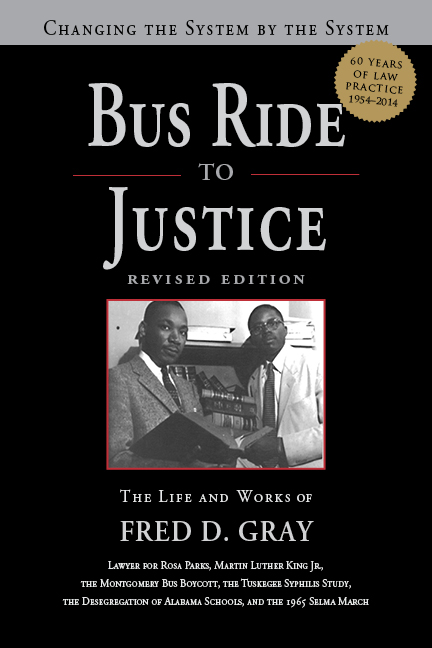
In Bus Ride to Justice, for instance, Fred Gray describes how Shuttlesworth was arrested in Montgomery for trying to eat at a white lunch counter. Bob Zellner describes in The Other Side of Murder Creek how Shuttlesworth waded fearlessly through the white mob outside the First Baptist Church on the night after the Freedom Riders were beaten in Montgomery, and then, with King and Ralph Abernathy, helped keep up the spirits of those trapped in the church during that long, frightening night while the mob raged outside. In The Judge, the biography of Frank M. Johnson Jr., Frank Sikora tells some of what Shuttlesworth faced as he confronted segregation in Birmingham’s schools in 1957:

“On September 11, 1957, Ruby Shuttlesworth, twelve, her sister, Patricia, fourteen, and two other black children went to all-white Phillips High School in Birmingham. They were driven by the girls’ father, the Reverend Fred Shuttlesworth, and his wife, Ruby, plus another minister, J.S. Phifer. As they pulled up in front they were met by a group of about thirty white men, some of them wearing brass knuckles, others carrying chains and clubs. They advanced, shouting threats and cursing. Then they broke out the car windshield.

“Shuttlesworth got out of the car, knowing what awaited him. He was set upon and knocked repeatedly to the ground. His wife and the girls attempted to get out and run to the school, but were forced back inside. Birmingham police, meanwhile–and there were only a few of them on hand–attempted to radio for reinforcements. The call was held up, they said, because the radio was airing a routine stolen car report. Later, the report was found to be false; the car reported ‘stolen’ actually was the property of Police Commissioner Eugene (Bull) Connor.

“Bleeding and bruised, Shuttlesworth managed to get back into his car and was driven by Phifer to University Hospital. While most of the news media centered its attention on Central High in Little Rock, the attempt by the audacious Shuttlesworth to implement the Brown order in Birmingham and Alabama ended in one day.

“Ruby and Patricia Shuttlesworth returned to the all-black schools they had been attending.

“Sizing up the racial situation of the day, President Eisdenhower uttered a statement that was less than profound when he said, ‘Patience is the key to integration.’

“To the average black person living in the South then — ninety-four years after Abraham Lincoln put his signature on the Emancipation Proclamation — it was hardly an encouraging word.

“The angry resistance Shuttlesworth encountered ended the integration drive in the education arena for six years.”

Significantly, Shuttlesworth didn’t quit. He may not have had the patience President Eisenhower spoke of, but he was incapable of quitting. He kept working and kept organizing and kept resisting. And then when the time was right, he helped move the movement into a higher gear.

Rest in peace, Fred. You’ve earned it.

Share this post:
  • email
  • Facebook
  • Twitter
  • RSS
  • Digg
  • del.icio.us
  • Google Bookmarks
  • LinkedIn
  • Reddit
  • Technorati
  • FriendFeed
  • MySpace
  • StumbleUpon

Black Belt civil rights pioneer Hulett passes

Tuesday, August 22nd, 2006 by Randall

John Hulett, the first black office holder in one of the historic Black Belt counties of Alabama, and the co-founder of the Lowndes County Freedom Organization, died August 21 at his home in Mosses, Alabama. He was 78 and had been in poor health for several years.

Lowndes County was and is one of the poorest counties in the U.S., despite being adjacent to the state capital. The county lies between Dallas and Montgomery counties and in 1965 the famous Selma to Montgomery march passed through Lowndes. Civil rights martyrs Viola Liuzzo and Jonathan Daniels were both murdered in Lowndes, and prior to the passage of the 1965 Voting Rights Act, there was not a single registered black voter in the county, though the population was 80 percent African American.

Hulett and his fellow activists in the Lowndes County Freedom Organization took their lives in their hands every day to challenge both state power and the unofficial terror of the Ku Klux Klan. But they prevailed, and the black panther they chose as their ballot symbol in Alabama elections was an inspiration to Stokeley Carmichael and other young activists who poured into the Black Belt to help Hulett and others register voters in the mid-1960s. The symbol was later adopted by the founders of the Black Panther Party.

Visitors to Hulett’s small office in the Lowndes Courthouse after he had become sheriff were startled to see hanging on his wall a vicious-looking wood-handled whip that he had inherited with the office. He kept it there, he said, as reminder that it had been used by his predecessors to beat Lowndes’ blacks for years. As sheriff for two decades, Hulett himself often did not wear a gun, and the county was so small and so poor that he often cooked the jail inmates’ meals himself.

Later he also won election as the first African American probate judge in the county, and he mentored a generation of Alabama black office holders who followed in his footsteps. Today, thanks to the gains of the Voting Rights Act, Alabama has more elected black officials than any state in the union.

He is to be buried Saturday, August 26, 2006.

Share this post:
  • email
  • Facebook
  • Twitter
  • RSS
  • Digg
  • del.icio.us
  • Google Bookmarks
  • LinkedIn
  • Reddit
  • Technorati
  • FriendFeed
  • MySpace
  • StumbleUpon

Civil Rights Attorney Fred Gray Awarded NAACP's Highest Honor

Tuesday, July 11th, 2006 by Brian

On July 17, the NAACP will honor civil rights attorney Fred Gray, NewSouth author of Bus Ride for Justice, with the William Robert Ming Advocacy Award for his long-standing civil rights contributions.

Gray, born in Montgomery, Alabama, grew up to become one of only two black lawyers in Montgomery in the 1950s. When his friend Rosa Parks was arrested in 1955 for violating the segregated seating ordinance on a Montgomery bus, twenty-six-year-old Martin Luther King, Jr., was chosen to lead the Montgomery Bus Boycott, and twenty-four-year-old Fred Gray became his–and the movement���s–lawyer. Gray���s legal victory in the federal courts ended the boycott 381 days later. Over the four decades since, Gray has won scores of civil rights cases in education, voting rights, transportation, health, and other areas. He represented the Freedom Riders, the Selma-to-Montgomery marchers, the victims of the Tuskegee Syphilis Study, and many more.

Gray spoke about the NAACP’s award, to be presented in Washington, DC, in a Montgomery Advertiser article earlier last week: “I became a lawyer to do the kind of work the NAACP did, and it’s a great honor to receive this award,” he said. “They have been with me throughout my entire career and given me the opportunity to defend them so they could be able to do business in this state.”

Fred Gray chronicled his civil rights career in his gripping memoir Bus Ride for Justice; he has also chronicled his work with victims of the Tuskegee Syphilis Study. Both of these books are available directly from NewSouth, from Amazon.com or from your favorite local or online book retailer. Limited signed copies of Bus Ride for Justice are also available from the NewSouth Bookstore, toll-free (866) 639-7688.

Share this post:
  • email
  • Facebook
  • Twitter
  • RSS
  • Digg
  • del.icio.us
  • Google Bookmarks
  • LinkedIn
  • Reddit
  • Technorati
  • FriendFeed
  • MySpace
  • StumbleUpon